
Offense Is All About Timing
Home > Gameplay Preview > Combat Timing & Essentials
Streamlined offensive combos for fast-paced combat
Q:
With combat moving at such a relentless pace, does executing offense—especially combos, chases, and target-swapping—get overly complex?
A:
Pressing the advantage with combo chains, pursuing knocked-back targets, pivoting between flanking foes in crowds, and instantly swapping targets after dropping minions—players already know this, Master Soul knows this, and Phantom Blade won't bother putting it to the test.
These inputs are streamlined under a single rule: satisfy the situational condition and hit the Sha-Qi Attack button. Once you get the hang of triggering that input whenever the prompt arises, executing these techniques in real combat becomes second nature.
Combo length hinges on your punish window. During generous openings, swap weapons immediately as a combo finishes to cancel recovery animations and sustain an unbroken barrage.
A vital combat note: when you knock an enemy back, close in aggressively to press your advantage. However, if an enemy deliberately steps back after finishing a strike, exercise caution—such retreats often herald an immediate follow-up attack. In group encounters, a retreating foe often signals that a different attacker is tagging in.
Enemy Counter Windows, Patterns, and Countermeasures
Q:
When initiating an assault, you must gauge when it is safe to unleash damage unchecked versus when a foe can retaliate. Keep watch for subtle attack tells and prepare precise counters accordingly.
A:
Combat in Phantom Blade revolves heavily on reading and answering enemy strikes; foes attack relentlessly, preventing Soul from simply stunlocking them.
This balance is achieved through two mechanisms: denying Soul sustained infinite stun locks, and giving foes break-out thresholds where they gain Super Armor or invulnerability to strike back or retreat.
Safe Damage Window
To safely deal damage, you must either strike during the enemy's extended stagger or vulnerability windows when retaliations are off the table, or ensure Soul's attacks possess full invulnerability frames or guaranteed stagger to suppress any incoming counter.
Currently, Ghost Step counterattacks seem to be the only moves granting seamless, full-duration invincibility frames (i-frames); weapon skills and special maneuvers rarely offer complete invulnerability.
When it comes to suppressing foes, only select weapon Masteries and special arts reliably keep targets locked down; standard arts, Ghost Step counters, and Sha-Qi attacks cannot guarantee 100% staggered suppression in current combat builds. Beware that pinning down adversaries grows considerably tougher on extreme difficulties.
Counterattack Mechanics for Both Enemy Types
Enemies broadly fall into two main archetypes: heavy targets and standard combatants.
Heavy enemies rarely parry or deflect attacks, nor can they be staggered by most of Soul's regular strikes.
These adversaries follow rigid attack and idle cycles with minimal behavioral variation.
The following section mainly details the various counter-attack branches utilized by standard enemies.
As mentioned earlier, enemies hit by attacks will forcefully break free once a certain threshold is reached unless placed under hard suppression. Provided they don't retreat, they typically counterattack in one of two ways.
Escape / Minor Guard / Major Guard / Counter
The first method uses hyper armor to break free before assuming guard.
Enemy defenses are split into Light Guards (signaled by subtle white glints) and Heavy Guards (marked by broad golden sparks resembling Soul's own blocking VFX).
Neither light nor heavy enemy blocks drain Soul's Sha-Qi. The exchange tends to follow a predictable cadence, typically:
1–2 Light Blocks, 1 Heavy Block, Counterattack
(While Soul's rapid flurry of strikes may cause foes to guard more frequently, it has little effect on overall combat pacing.)
Guarded hits deal zero damage: light blocks shave off a bit of their Sha-Qi, while heavy blocks cause no Sha-Qi loss.
In short, the enemy gains damage mitigation during this window, using their guarded stance as a visual cue warning players of an imminent counterattack.
Tank hits to break free and counterattack
The second type simply absorbs the blows. Though visibly staggered, they activate hyper armor to power through and immediately retaliate.
These counterattacks likely trigger at specific damage thresholds without obvious defensive tells, though the foe still absorbs the full brunt of your damage.
Anticipate and parry enemy counterattacks
Regardless of which counter technique you employ, watch out for the enemy's swift start-up moves. Relying solely on telegraphed cues and raw reflexes often falls short here, so it is best to preemptively raise your guard early as a precaution.
How to Find the Right Damage Window
Q:
How can players reliably seize damage windows throughout the heat of battle?
A:
Since Soul cannot relentlessly overpower opponents at all times, studying the overall choreography of enemy attack strings is vital for uncovering optimal openings.
Focus Management on Offense
This point warrants special emphasis: foes strike back frequently, overextending with greedy combos never justifies the damage Soul takes, and attack inputs are already heavily streamlined. Consequently, your focus during an assault shouldn't be on dealing damage, but on watching and predicting the enemy's impending counter.
Prioritizing observation seems passive but serves offense equally well: Soul cannot tank heavy hits, and studying enemy patterns reveals the cleanest openings to punish.
Striking is instinctive, a manifestation of fighting spirit and the obvious way to bring down foes. Yet within this combat system's optimal flow, basic offense should demand very little conscious attention compared to reading your opponent.
Recommended damage windows and key considerations
The hit-frame intervals between strikes within an enemy combo string serve as key attack windows.
The transition between adjacent move sets, from the ending strike of the previous set to the opening strike of the next, including
Initial combo recovery pause → stance reset → brief neutral hold → follow-up combo startup
This entire 'adjacent rest' downtime represents another major category of attack windows.
Recovery pauses between combo strings typically match the duration of medium-to-long intra-combo windows. Since the prior string usually ends with a heavy strike followed by a predictable reset animation, these openings are much easier to read and memorize. If a combo sequence concludes with a red or blue flash, the inter-combo pause shifts directly into a 'flash telegraph into Ghost Step counter' sequence.
In general, it is best to practice recognizing damage windows during enemy recovery frames between combos.
No matter which opening you take to strike, always leverage your adaptive defense mechanisms to guard against unexpected threats.
Sha-Qi Attacks tap into the same resource pool used to hold guard. Sha-Qi is consumed the moment the move begins and will not be refunded upon cancellation, making it essential to save these strikes for generous, well-understood punish windows.
Adjacent Resting Categories
As noted previously, categorize the target as either heavy or standard first, then check whether the opening attack ends with basic strikes or red/blue flashes. Red and blue indicators assume successful execution of a Ghost Walk counterattack.
Note that this breakdown covers standard encounters. When facing elite foes, boss-level mechanics, or playing on the highest difficulty, enemy recovery windows and the interruption efficacy of Soul's Ghost Step counter may behave differently.
Resting Near Heavy Enemies
Standard attack finisher recovery. The enemy typically idles through this recovery window at their own pace—striking them neither breaks their stride nor forces a guard or stagger.
If an enemy's previous recovery animation was brief or standard, play it safe; but if their attack leaves them exposed with a lengthy wind-down (such as after a heavy tackle or slam), seize the opening to unleash Sha-Qi attacks.
A red-and-blue flash marks the attack's end. Use Ghost Step to counter and stagger the foe, opening up a brief window to deal uninterrupted damage.
Once the stagger ends, the enemy resets on their own cadence like a standard combo wrap-up, ignoring incoming hits without triggering guard or another stagger.
Nearby regular enemies resting
Finisher recovery for standard attacks falls into three distinct scenarios:
- No hit taken; resets automatically
- Hit stun followed by forced recovery into guard
- Hit stun followed by poise through with slight balance disruption
Their natural recovery windows are rather brief, making sustained pressure the best way to earn longer damage openings. Counterattacks come in the form of blocking or hyper-armor; shape your offensive rhythm around these known retaliation thresholds.
Concludes with a red-and-blue flash. Counter with Ghost Step to stagger the enemy and unleash damage during their vulnerable window, followed by three branching finisher variations akin to standard combos.
Combo Move Interval Type
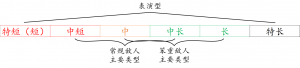
Enemy Attack Cadence Categories
As shown above, this follows the categorization established earlier and will be reused here.
Ultra-short and medium-short intervals: best ignored and left for seasoned masters to decipher.
Moderate window. Basic attacks recommended.
Medium-long window. Strike with basic attack combos, or open with a Sha-Qi skill capable of executing its full damage sequence uninterrupted.
Longer recovery gap. You can unleash multi-stage Sha-Qi strikes here, but act quickly before the opening shuts.
Extra-long intervals are tricky and highly situational. Though the window is generous, flair-heavy animations often keep the target frustratingly out of range.